How to Heal After a Relationship Breakup
How to Heal After a Relationship Breakup: A Mindful Therapist’s Guide to Finding Peace and Moving Forward
Heartbreak is one of life’s most painful emotional experiences. Whether you’re grieving the end of a dating relationship, separation, or divorce, the loss can leave you feeling overwhelmed, uncertain, and emotionally exhausted.
The truth is that breakups are an inevitable part of life—and the risk we take when we choose to love. While the end of a relationship may feel like failure, it can also become one of the greatest opportunities for healing, self-awareness, and personal growth.
Instead of asking,
“How do I stop hurting?”
Try asking,
“How can I move forward with greater wisdom, compassion, and clarity?”
That question shifts the focus from simply surviving heartbreak to creating meaningful, lasting healing.
Why Breakups Hurt So Much
The end of a relationship often means losing more than your partner. You may also grieve:
- The future you imagined together
- Daily routines and shared experiences
- Your sense of identity
- Feelings of security and belonging
Research has shown that emotional rejection activates many of the same areas of the brain associated with physical pain. Your heartbreak is real, and your emotional response is valid.
Although it may be tempting to distract yourself or rush into another relationship, genuine healing takes time.
A Breakup Can Become a Turning Point
Many people view a breakup as the end of their story.
In reality, it can become the beginning of a new chapter.
The weeks and months following a breakup offer a valuable opportunity for self-reflection. With mindful awareness, you can better understand your relationship patterns, clarify your values, and reconnect with the person you are becoming.
Ask yourself:
- What did this relationship teach me?
- How have I grown?
- What do I want to carry into my next relationship?
- What patterns am I ready to leave behind?
Sometimes our greatest personal growth begins where our greatest heartbreak ends
What Couples Therapy Can Teach Us About Breakups
As a Mindful Couples Therapist, my approach integrates mindfulness with evidence-based therapy, including the Gottman Method, one of the world’s leading research-based approaches to relationship therapy. I often remind clients that therapy isn’t simply about deciding whether a relationship should continue.
It’s about understanding:
- How did we get here?
- What happened between us?
- What patterns contributed to the relationship ending?
- What can each person learn moving forward?
Recently, I worked with a thoughtful couple who intentionally chose couples therapy to help them separate respectfully rather than remain stuck in blame and resentment.
Their goal wasn’t reconciliation.
Their goal was understanding.
They wanted to learn from the relationship, honour what they had shared, and move forward with greater emotional health.
This kind of work allows healing to continue even when the relationship has ended.
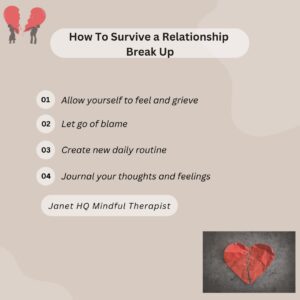
Five Mindful Steps to Heal After a Breakup
1. Allow Yourself to Grieve
Healing begins by giving yourself permission to experience your emotions.
You may cry.
You may feel angry.
You may feel relieved.
You may feel completely numb.
Every emotion deserves space without judgment.
Healing is not about avoiding pain—it’s about moving through it with self-compassion.
2. Let Go of Blame
After a breakup, our minds often search for someone to blame.
Mindfulness invites us to step away from rigid, all-or-nothing thinking.
Instead of asking,
“Who’s right?”
Ask,
“What can I learn?”
You can love someone and still recognize the relationship needed to end.
You can cherish beautiful memories while acknowledging unhealthy patterns.
Growth begins when blame gives way to understanding.
3. Create New Daily Rituals
Relationships become woven into our daily routines.
After a breakup, rebuilding those routines helps restore emotional stability.
Focus on simple habits that nourish your mind and body:
- Prioritize restorative sleep
- Eat nourishing meals
- Spend time outdoors
- Practice mindful movement or yoga
- Connect with supportive friends
- Rediscover hobbies that bring you joy
Small daily habits(opens in new tab) create powerful long-term healing.
4. Journal Your Way Toward Healing
Journaling helps organize(opens in new tab) overwhelming emotions and quiet repetitive thoughts.
Writing allows you to reflect instead of simply reacting.
Ask yourself:
- What did I learn about myself?
- What strengths did I discover?
- What qualities matter most in my future relationships?
- What am I ready to release?
Your journal becomes a record of your healing journey.
5. Know When to Seek Professional Support
Sometimes heartbreak becomes too heavy to carry alone.
If grief continues to interfere with daily life or feels overwhelming for an extended period, therapy can provide the support you need.
Working with a therapist can help you:
- Process painful emotions
- Build self-compassion
- Improve emotional resilience
- Break unhealthy relationship patterns
- Rebuild confidence
- Prepare for healthier future relationships
Seeking help is a courageous investment in your emotional well-being.
Final Thoughts
Healing after a breakup isn’t about forgetting someone. It’s about remembering yourself.
Every relationship teaches us something about love, boundaries, communication, and resilience.
When we approach heartbreak with mindfulness, curiosity, and self-compassion, even our most difficult endings can become powerful new beginnings.
At Atha Jiva Mindful Therapy and Holistic Wellness(opens in new tab), I support individuals and couples through life’s most challenging transitions using evidence-based therapy, mindfulness, and holistic wellness practices.
If you’re healing after a breakup, navigating separation, or rebuilding after divorce, you don’t have to do it alone.
Healing takes time—but with support, self-compassion, and mindful reflection, you can move forward with greater peace, confidence, and hope.